Speaker
of the (Carnegie) Hall
By
Michael Kleff
What were the
issues you were first interested in?
The vision was always
that we’re gonna make the world a better place to live in.
Both on a local level and our understanding of the world. There
were two big political things at that time. One was the Spanish
Civil War. Then there was the invasion by Mussolini of Ethiopia.
Then they called it Abyssinia. Then the rise of Hitler. Those were
the foreign issues.
The issue in our country
was the fight of the organization of the unions. We gave a lot of
support to the rise of the union movement, to fight for unemployment
benefits, for social security. We stood at subways handing out flyers.
We had street meetings. We tried to influence as many people as
possible.
During World
War II you were stationed in India. What was it like?
It was like going into
a dreamland. We found the culture, and the way of living, entirely
different than we had grown up in, in our own country. It took weeks
for us to get accustomed to the culture and the living standards
of India which were pretty poor, very poor at that time.
How did you meet
Nehru?
I think it was in December
of 1945. I read in the Calcutta newspapers that the leadership of
the All India Congress, the main political organization fighting
for independence, was to hold a meeting in Calcutta. It announced
that attending the meeting would be Jawaharlal Nehru, who was then
the leader of the Indian Congress, and Mahatma Gandhi, as well as
all the other leaders of the country. Well, this was a rare opportunity
to find all of these prominent people in one place. And I figured “How am I gonna get to try to meet these people?” Fortunately,
I knew a family in Calcutta and the father was a prominent member
of the Congress. I asked him if he would give me a note to take
to where Nehru was. And he gave me a note. I went to the house.
Hundreds of people were outside, in the gardens of the house. It
was unusual for them to see someone in an army uniform going into
the house. Then Nehru walked into the room and we were introduced.
We sat down and Nehru said that he’s gonna have some meetings
very soon and perhaps I could come back and we’ll spend “as
much time as you want.” I said “Fine.” I noticed
he was a chain smoker and then I offered to bring him a carton of
cigarettes, which I did later on. I waited around and sure enough
I was paged and Nehru got on the phone and told me I can come by
within an hour or so, which I did. And then I became friendly with
him. It was he that gave me a letter of introduction to Gandhi,
which was unusual.
So you met Gandhi?
I had this note in my
hand from Nehru. His secretary comes out and says “Gandhi
can’t see you today. This is Thursday. He doesn’t talk
on Thursdays. Come back tomorrow.” Fortunately, I asked him
for the note back, which was handwritten by Nehru, and Gandhi had
written on the bottom of it for me to come back. I still have this
note in my house. I came back the next day. And I brought along
with me a black soldier who was a well known communist in the United
States. Gandhi was seated in his room running his spinning wheel.
He asked someone to get us chairs but we said no, we will sit on
the floor as he did. First question he asked was “Why are
there American soldiers in India and what are you doing here? What
is the attitude of the American soldiers? How was Paul Robeson?
Who was Harry Truman?” And he kept probing us on the role
of the American soldiers in India. He gave me, which I still have,
the flag of the Indian National Congress. Nehru gave me a book.
I did see Nehru when he came to New York, in ´64. He recognized
me and his comments would satisfy Natalie when his first remark
to me was “You gained weight.” I did, of course. (laughs)
Is India still
a part of your life?
My experience in India
was one of the highlights of my life. When I returned to the United
States I helped organize a group called The American Friends of
India which consisted of veterans who served in India. For all these
years I have maintained a steady interest in India. I made repeated
visits back there. I became acquainted with a lot of friends, some
of whom became prime ministers, presidents of India, leaders in
their government offices. I’ve been able to gather a very
good collection of Indian contemporary paintings… probably
the best private book collection on India in New York. So it’s
been a big, big force in my lifestyle and my outlook on things.
Even in India,
music and politics were closely related for you. How did you meet
Ravi Shankar?
I met him as a young
musician who was then leader of a musical group at the Indian Peoples'
Theater Association in Calcutta. We became friends. And again, he
came to the United States and we greeted each other and we see each
other from time to time. He called me and wanted to know, ´cause
he was also a good cook, he wanted to have a dinner. Could I invite
Pete Seeger? Could I invite Bob Dylan? I called and of course they
all came. Now, the interesting thing is we got there at about 7:30
pm and he said “Before we have dinner let me play a few ragas.”
(laughs) The ragas went on for hours! We’re used to having
dinner by eight o’clock! Dylan is looking at me and saying,
“Hey, when are we gonna eat?” Finally, about 10:30 Ravi
said, “Well, we’re ready to have food.” We were
all exhausted.
When you returned
from India, you resumed your contacts with the music world.
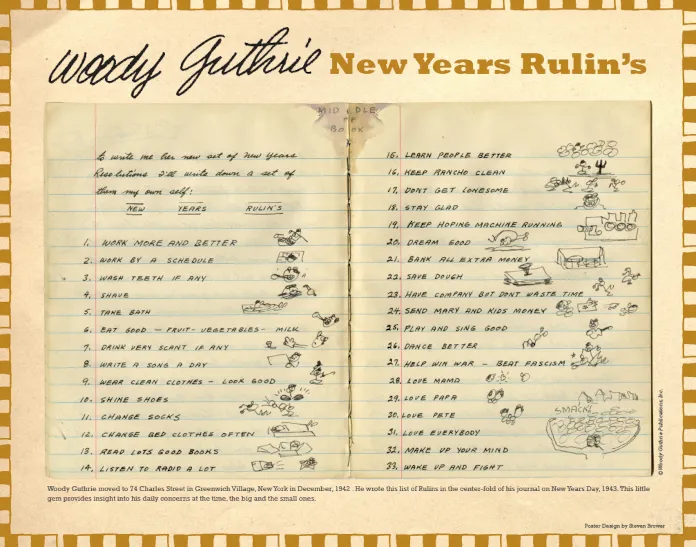
You met people like Woody Guthrie, Cisco Houston, Sonny Terry, Pete
Seeger
and The Weavers. How did that happen?
I was reading The Daily
Worker and I saw the columns by Woody Guthrie. I became more interested
and went down to the big memorial concert for Lead Belly. I really
became interested in that music before I met Pete Seeger. At that
time I would go to the hootenannies because it was a political thing,
too. And I would see Woody there, Lead Belly, Pete, and other people.
So that was my introduction to that music.
It was later that I met
Pete. We’d go to the same political events. Pete knew that
I had worked for Irving Berlin. What we learned from the left was
a good sense of organization. I mean, you had to carry out certain
obligations on time and be exact. I had the feeling that I could
do things in an organizational way. That’s what came up when
Pete asked me to manage the Weavers. I said, “Sure I can.” That changed my whole life.
And not just
in music, but also because of the political situation. I mean, the
anxiety created by the Republican Senator Joseph McCarthy who started
the witch hunt for so-called communists in politics, public service
and culture. Even the success of “Goodnight Irene” couldn’t
help The Weavers.
It was around 1951 when
the whole Red Scare was beginning to rise. There was a publication
that listed The Weavers as being communists. And therefore, there
were certain organizations that demanded that the stores shouldn’t
sell these records and radio stations shouldn’t play them.
Then the bookers said “Well, there’s a little trouble
getting you bookings.” And people in the industry would say
“Why are you hanging around with these people? Nobody will
come to you to manage them.” And I just kind of laughed at
these guys and said, “You don’t understand what it’s
all about!” So, I tried to be supportive of them, which I
was, of course. Tried to fight all of these things. But you couldn’t
fight them. The whole atmosphere was that everybody stayed away
from you. When the blacklisting took its effect nobody in the music
industry would come to our
defense. They even avoided calling me up to say “Look, I can’t
talk about it, but I think it’s terrible.” Nobody.
In 1955, Pete
Seeger had to appear before the House Un-American Committee and
was banned from TV and radio until the early ´60s. But you
always found ways and means to schedule gigs for the Weavers and
Pete, and find radio stations which, in spite of strong pressure,
were willing to play their records.
People were scared but
not frightened. In other words, they were annoyed at the situation.
More so because a lot of people did not show any sympathy because
they were afraid. So you became isolated. The left was being destroyed.
But you stuck with it, because at least I felt I never did anything
[to violate] the democratic principles of our country. This was
a Red scare and we had a feeling that it was going to be over, sooner
or later. So you stuck to your guns. We looked for other ways to
make a living where possible, or we were able to live on what we
were doing. I could have possibly made a much better living or been
more successful, but I didn’t want to trade that in for what
I believed in. I could have dropped the whole thing and gone on
in the music or the entertainment business without this. But that’s
not where I was.
Were you personally
threatened?
The FBI used to come
around wanting me to discuss things with them. Their main question
was “As a good American, don’t you want to tell us about
the menace of the communists that you’re a member of?”
Either you talked to them or you said “no” and shut
the door on them. I said “no” and I shut the door. Of
course I was scared, but I knew there were other people going through
the same thing. Things were tough enough. They couldn’t have
made it tougher for me... I wasn’t losing a big job with a
lot of money.
They used to come [to
the office], and call me at home. They would wait for me downstairs
in my building. Always two guys. And it was obvious. They walked
across when I went to the subway, nudging me. And I never said a
word to them. I did have a lawyer waiting in the wings. He said, “Just ignore them.” Within a year after they started
this, they disappeared. But years ago, when I got my FBI reports… boy, they knew everything!
Up until 1955, I couldn’t
get a passport. Pete couldn’t get a passport. The State Department
would not give passports to alleged Reds. I have an official letter
in which they turned me down. I didn’t go overseas until 1960.
How did your
political beliefs transfer to your work?
As a manager, or concert
producer, I could use that organizational talent for left wing or
progressive causes. And I did. Around the early fifties I left the
communist movement as many of us did. But that doesn’t destroy
or kill the kind of things that you believed in… justice,
civil rights. That struggle was still there. So you transfer all
of that to the struggles of the time, which in the late fifties
was the civil rights movement. Then later on the anti-Vietnam movement.
Whenever I was called upon to sponsor events that would raise money
for these causes, I did.
It was August ´63
that there was the famous speech that Martin Luther King, Jr. made
in Washington. It had to do with breaking the question of the race
situation in the United States. I was fortunate that I had met Dr.
Martin Luther King. On one occasion I told him that I had met Mahatma
Gandhi. He spent an hour with me just [asking me] to tell him about
Mahatma Gandhi.
I dealt a lot with the
black leaders, the young leaders in the South, helping them arrange
affairs where money was being raised. I did not go down to the South
on these demonstrations. But certainly, the people in our office
went. Pete was a leader of that and Theodore Bikel at that time,
Judy Collins, even Arlo [Guthrie]. I got Bob Dylan to go down at
that time. I was back in the office dealing with the various people,
setting up programs to raise money. I felt that was my contribution.
There weren’t too many artists, considering the numbers around,
that even participated in that. One of the rare ones was the jazz
singer Tony Bennett who went down to the South.
Pete Seeger wrote
about you, “He has done something extraordinary for The Weavers.
He risked his own head and believed in us when nobody else did.
You might say he believed in America.” Thinking of the present
political situation, is it hard to still believe in America?
Well, honestly, I feel
somewhat depressed, politically. This is the worst in my history
of being around as a citizen. We got an administration that is on
the border of [being] neo-fascist, in my opinion. And this is it.
This is a calamity.
Thinking about
all the years you fought for a better world, how do you feel now?
Is it painful?
I don’t think it’s
painful. Disappointing is the word. That doesn’t mean I shouldn’t
continue being in progressive causes, or causes that are for the
better of minorities. Those causes are still there. You just don’t
give up. You’re always somewhat optimistic that somewhere
along the line whatever you stand for is gonna come true. It’s
the struggle of getting there that has become very difficult. The
atmosphere in our country today is extremely difficult. We don’t
have enough forces that we might have had 30 years ago to rally
around good causes. We’ve been marginalized. Apparently the
right wingers don’t care what we say. They let us say it because
they know, or they think, that we don’t mean anything. This
is what’s happening to a great extent.
I’m optimistic
because, look, we got rid of Nixon! Whoever heard of a president
being kicked out? There is the ability in this country, in spite
of its faults, in spite of its difficulties, you can open your mouth.
You might get arrested in some places (laughs) but you get out.
There’s a lawyer gonna get you out!
Do you ever regret
your decision not to join the big music business when you had the
opportunity to, and instead stuck to your principles and friends?
I am extremely proud
and happy that I had the chance to work with unique people. Whether
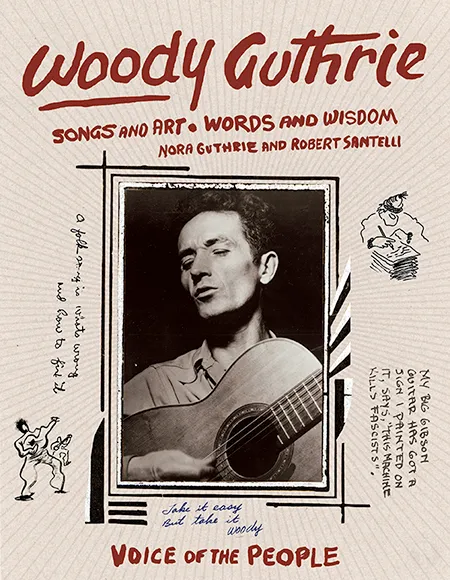
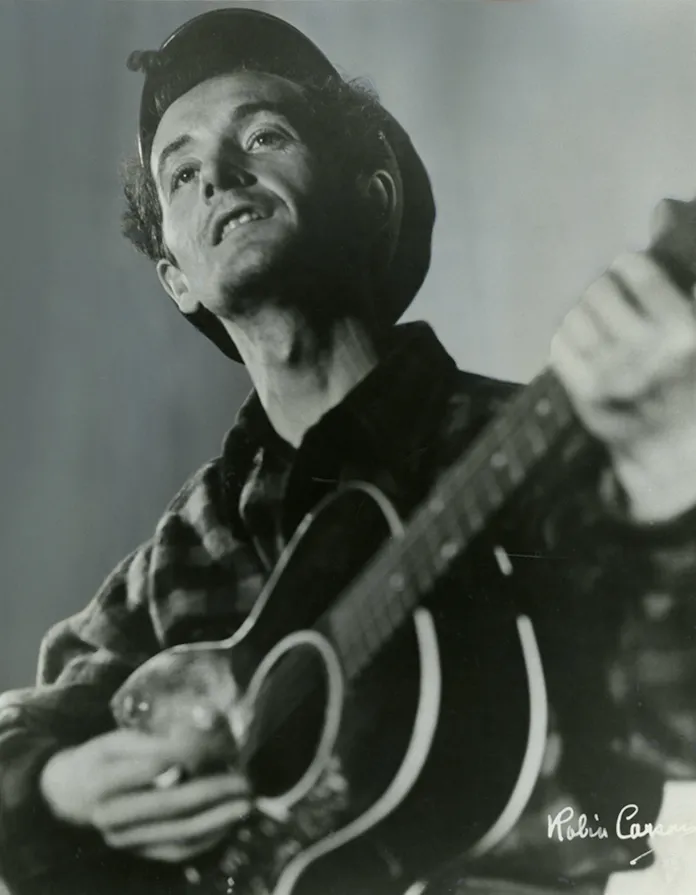
it’s Woody Guthrie, The Weavers, Pete, Judy Collins, Arlo
Guthrie, Theodore Bikel, Alan Arkin. These are good people. Talented
people. And I worked very well with them. That in itself is a satisfaction.
I made a contribution in permitting these people to flourish, or
helping them flourish. You know, Pete … I quote him a lot
´cause he comes up with quotes (laughs) … he got a Grammy
Award. They went into a room with people from the press and someone
said, “Mr. Seeger, how do you feel, at your age,” and
Pete was then probably 78, “at this late date in your career
to have first won this award?” Pete looked at the guy and
he said, “I never had a career. I did what I wanted to do.”
In a sense, too, I did what I wanted to do. I had many opportunities
to advance myself in the business. I chose not to. I made a reasonably
good living out of it. And I felt I had to be part of the people
I was working with. I felt part of them.
You’ve
been married to Natalie for 49 years. She once told me that humor
has
helped the two of you get through everything. Is this true?
Yes. And being hopeful.
Feeling that you’re doing the right thing. The rationale that
whatever you do, you think it’s the right thing. Perhaps not
everything but on the whole you feel the decisions that you make,
whether it’s political decisions or decisions about living
conditions of your own, you’re doing the right thing. And
in the process you’re working with people that have similar
feelings that you have, so you are not completely isolated.
What do you enjoy
doing now?
I like to read. I like
to listen to music… I used to go to the theater a lot but
it becomes a little more difficult and I’m almost revolting
because the theater costs so much. I can afford it, but why should
I spend that kind of money for these things? I’m annoyed with
frivolous things. I mean the whole development in the music scene
is really negative as far as I am concerned. It’s shallow,
it’s meaningless. It’s all hype. This country is built
on hype.
I’m turning 84
in a month. I’ve been through a lot, and collected things.
I looked at some things I had, little notebooks I made in 1932 and
I’m reading them. Memo books, what I did in the day, even
how much I spent, carfare, lunch money. In a sense, I have a record
of my life. Paper records, photo records, mementos. I still continue
my interest in India … I think what I wanna do in the next
year or so is spend more time assembling all of these things, so
that it’s not dispersed. It will be left as a memo of what
I’ve done. Either for the family or whoever wants to use it.
|